The last weekend jaunt I took at UK residents (cue: sad music/crying face) was a quick trip to explore Bristol and Bath in the west.


Just under a 2 hour train from London is Bristol, a harbourside town in Somerset. Bristol straddles the River Avon and have a very rich prosperous maritime history, accordingly. Its former city-centre port is now a cultural hub, the Harbourside, where 19th-century warehouses now contain restaurants, shops and galleries. I even had Michelin-guide dinner in a converted shipping container! It was a great spot to walk around and explore!


I started by walking through the city center and a stroll through Queen Square and the College Green. The Green takes the form of a segment of a circle with Bristol Cathedral on the south side, and City Hall (formerly the Council House) on 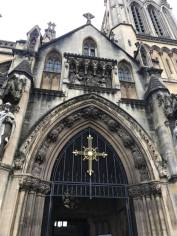
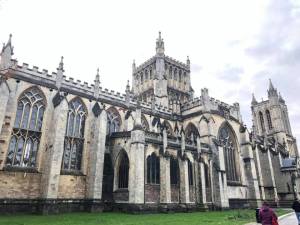 the North. Bristol Cathedral, formally the Cathedral Church of the Holy and Undivided Trinity, is the Church of England cathedral founded in 1148. It was originally St Augustine’s Abbey but after 1542 the seat of the newly created Bishop or Bristol and the cathedral of the Diocese of Bristol. This historic building is one of the architectural highlights on the city, to be sure.
Continuing on through this very hilly city, my next site was a stop at the S.S. Great Britain, a staple landmark of Bristol. The SS Great Britain is a former passenger 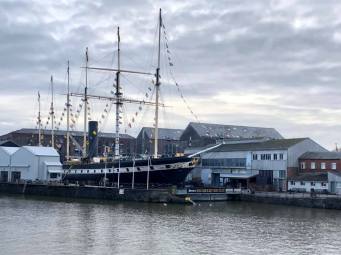 steamship, now museum, which was the longest passenger ship in the world from 1845 to 1854. It was designed by Isambard Brunel for the Great Western Steamship Company’s transatlantic service from Bristol to New York. Uniquely, this ship was the first propeller driven, iron steamer to cross the Atlantic, which she did in 1845.
A name that comes up quite frequently in Bristol is Isambard Brunel. Brunel is a British civil engineer who is considered “one of the most ingenious and prolific figures in engineering history”, “one of the 19th-century engineering giants”, and “one of the greatest figures of the Industrial Revolution, who changed the face of the English landscape with his groundbreaking designs and ingenious constructions”. Brunel built dockyards, the Great Western Railway, a series of steamships including the SS Great Britain, and numerous important bridges and tunnels. His designs revolutionized public transport and modern engineering.
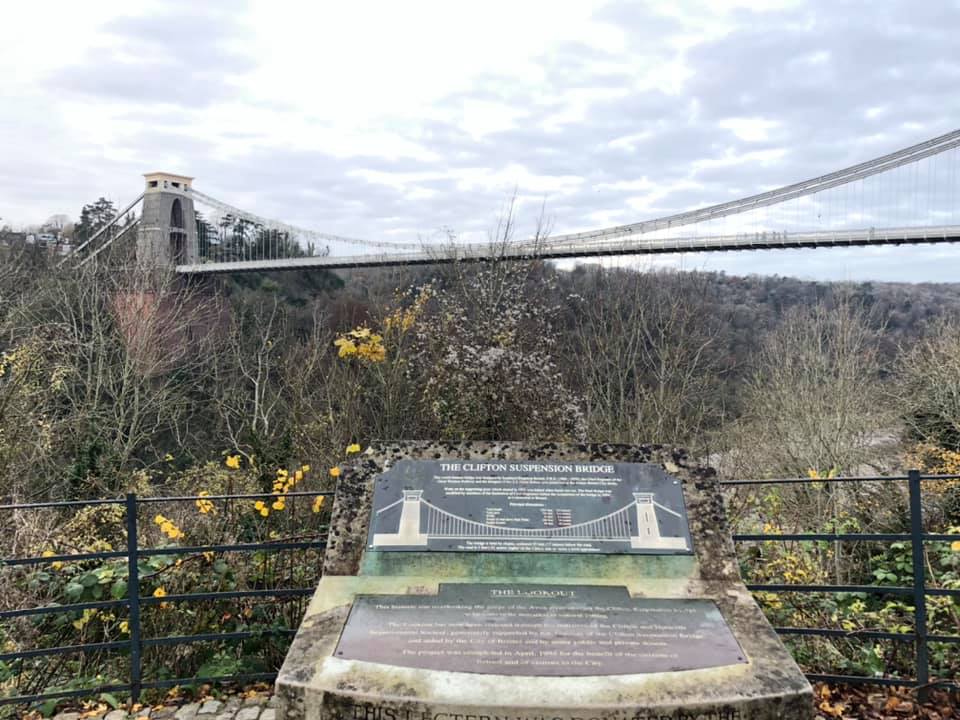
In the western part of Bristol is a lovely little suburb called Clifton- a must-see location for the Clifton Suspension Bridge. The Clifton Suspension Bridge is a Brunel-designed suspension bridge, spanning the Avon Gorge and River Avon, opened in 1864. The bridge is built to a design by William Barlow and John Hawkshaw, based on a design by Brunel in earlier years. The idea of building a bridge across the Avon Gorge originated in 1753 (original plans were for a stone bridge and later iterations were for an iron structure, as it is now).
Strolling back to the city I stopped in to see Cabot Tower, a 105ft tower built in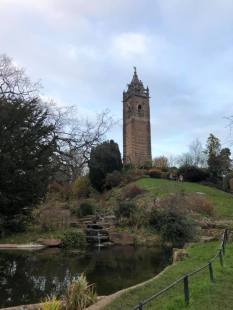 1897 to commemorate John Cabot’s famous voyage from Bristol to Canada four hundred years earlier, in 1497. The tower is located on Brandon Hill – the oldest park in Bristol. As with all lovely European towns at Christmas time, we ended the evening with a stop at a Bavarian-style Christmas village in Millennium Square at the heart of the city.
Just a 15 minute train ride to the east is the historic city of Bath, making this an easy joint trip! Bath has been a World Heritage site since 1987, famous for its architecture and the Roman Baths.

At the city center is the beautiful Bath Abbey, founded in the 7th century and former Benedictine monastery. Gorgeous Georgian Architecture abound in this city, all crafted from Bath stone (a type of limestone). Main sites include the 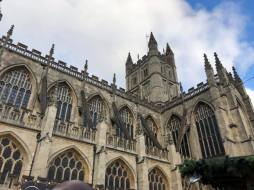 famous residential Royal Crescent and The King’s Circus. Many of the streets and squares were laid out by John Wood, The Elder and also his son. In the 17th and 18th century the city became very fashionable for famous residents due to the hot springs and the rumor of the healing properties within the spa– even Jane Austen lived in Bath!


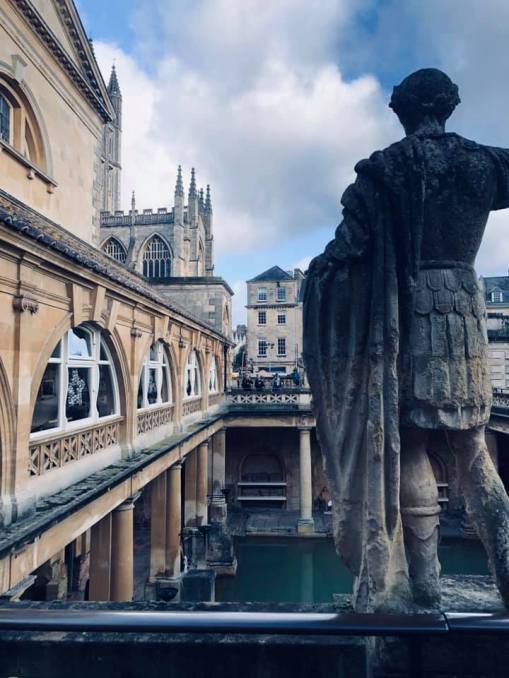
 Of course, as the name suggests, the highlight of the visit to Bath is touring the Roman build baths above the nature hot springs. The city became a spa with the name Aquae Sullis (“the waters of Sul”) in 60 AD when the Romans settled and built the baths and a temple in the valley of the River Avon. Today, the Roman Baths are preserved in four main features: the Sacred Spring, the Roman Temple, the Roman Bath House, and a museum which holds artifacts from Aquae Sulis. The artifacts include over 12000 Roman coins and 130 curse tablets (Many of the curses are related to thefts of clothes whilst the victim was bathing).
This was a wonderful get-away weekend and a special way to wrap up my year of trips!
-MAL
Hotel: Doubletree by Hilton Bristol City Center
Restaurants:
- Tare (Bristol)
- Grain Barge (Bristol)
- The Salamander (Bath)
Sites:
- Bristol Abbey, College Green
- Clifton Suspension Bridge
- Bristol Harbourside
- Cabot Tower
- SS Great Britain
- Bath Spa/Roman Baths
- Bath King’s Circus
- Bath Royal Crescent
 Travel with MAL